
When your air conditioner stops cooling properly, makes unusual noises, or starts cycling on and off unexpectedly, the problem isn’t always as obvious as it seems. While many homeowners assume a quick part replacement will solve the issue, experienced technicians know that effective repairs begin with a comprehensive inspection—not guesswork.
Professional AC Repair Surrey services involve much more than identifying a faulty component. Every inspection is designed to uncover the root cause of the problem, evaluate the overall health of the HVAC system, and prevent recurring breakdowns. A thorough diagnosis also helps homeowners avoid unnecessary repair costs by addressing hidden issues before they become major failures.
In this guide, we’ll explain what certified HVAC technician Surrey inspect during every AC repair visit and why this detailed process leads to safer, more reliable, and longer-lasting cooling performance.
Quick Answer: What do HVAC technicians inspect during an AC repair?
During an AC repair inspection, HVAC technicians evaluate refrigerant pressure, electrical components, airflow, thermostat operation, evaporator and condenser coils, condensate drainage, compressor performance, blower assembly, duct connections, and overall system efficiency. This systematic approach helps identify the true cause of cooling problems and ensures accurate, long-term repairs.
Why a Complete AC Inspection Matters Before Any Repair
Modern air conditioning systems are made up of interconnected mechanical and electrical components. A single symptom—such as warm air—can have multiple underlying causes.
Rather than replacing parts based on assumptions, professional inspections focus on finding the source of the issue. This approach helps:
- Improve repair accuracy
- Reduce repeat service calls
- Protect expensive HVAC components
- Restore energy efficiency
- Extend equipment lifespan
- Maintain manufacturer performance standards
1. Thermostat Communication and Control Signals
Every inspection starts by verifying that the thermostat is communicating correctly with the HVAC system.
Technicians inspect:
- Temperature calibration
- System mode settings
- Wiring connections
- Smart thermostat communication
- Voltage signals between components
A malfunctioning thermostat can often mimic larger system failures.
2. Refrigerant Pressure and System Balance
Low cooling performance doesn’t always mean the refrigerant simply needs to be topped up.
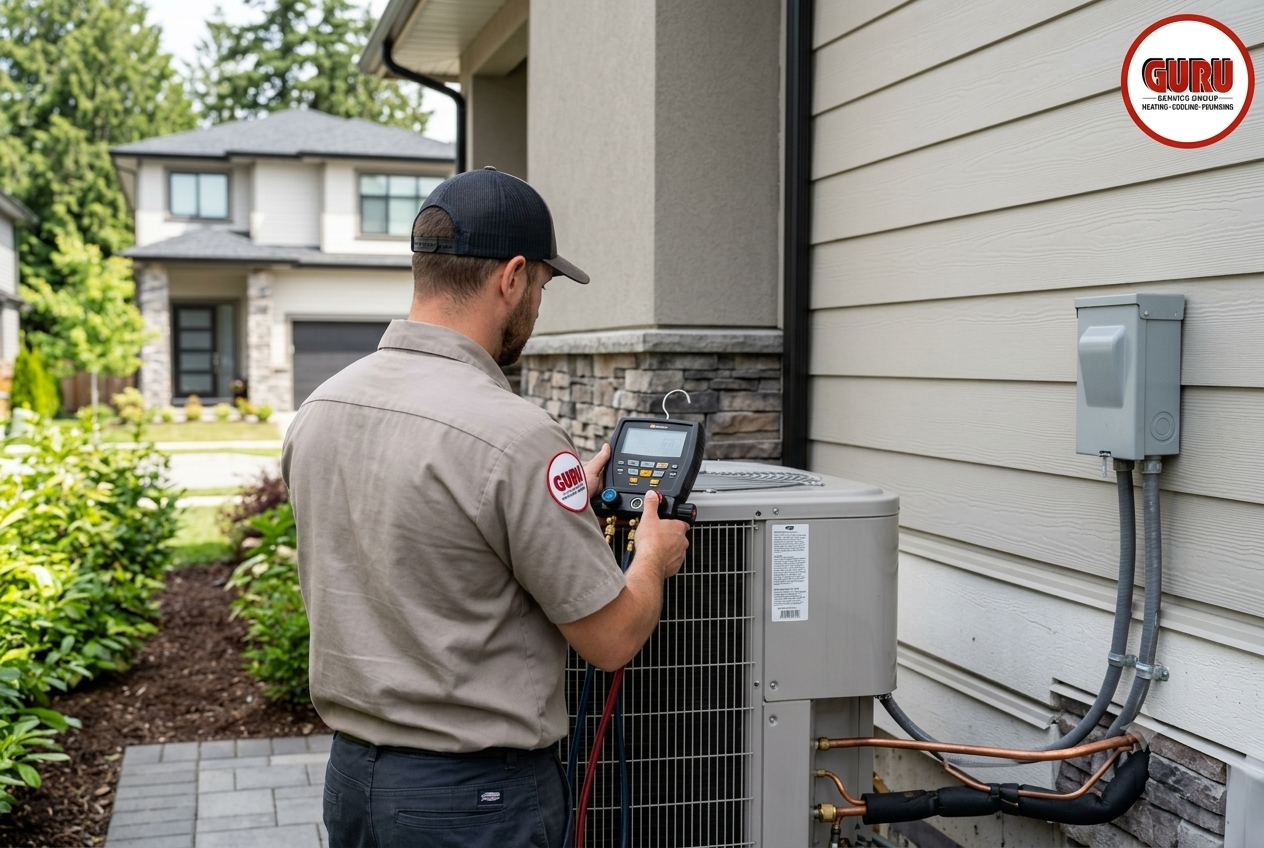
During AC Repair Surrey, technicians measure:
- High-side pressure
- Low-side pressure
- Superheat
- Subcooling
- Refrigerant charge balance
Abnormal pressure readings may indicate leaks, airflow restrictions, or internal component failures rather than refrigerant loss alone.
3. Evaporator Coil Condition
The indoor evaporator coil absorbs heat from your home. Even a thin layer of dirt can reduce cooling efficiency.
Technicians inspect for:
- Dust accumulation
- Ice formation
- Corrosion
- Oil residue
- Airflow blockage
Oil stains around the coil may also indicate refrigerant leaks requiring further investigation.
4. Condenser Unit Performance
Outdoor condenser units operate in challenging conditions throughout Surrey’s changing seasons.
During inspection, technicians check:
- Coil cleanliness
- Fan motor operation
- Condenser fins
- Air circulation
- Debris around the unit
Restricted airflow forces the compressor to work harder, increasing energy consumption and wear.
5. Electrical Components Under Load
Electrical failures are among the most common causes of air conditioning breakdowns.
Our technicians test:
- Capacitors
- Contactors
- Relays
- Circuit board operation
- Voltage supply
- Amperage draw
Testing components while the system is operating often reveals issues that visual inspections alone cannot detect.
6. Compressor Health Assessment
The compressor is the heart of every air conditioning system.
Rather than assuming replacement is necessary, technicians evaluate:
- Starting performance
- Operating amperage
- Internal pressure balance
- Noise levels
- Temperature readings
- Short cycling patterns
Early diagnosis can often prevent catastrophic compressor failure.
7. Airflow and Static Pressure Testing
Poor airflow can reduce comfort even when the cooling equipment itself is functioning properly.
A professional inspection includes checking:
- Blower motor performance
- Air filter condition
- Supply airflow
- Return airflow
- Static pressure
- Duct restrictions
Restricted airflow is one of the leading causes of frozen evaporator coils and reduced efficiency.
8. Condensate Drainage System
Air conditioners remove moisture as they cool indoor air.
Technicians inspect:
- Drain pan condition
- Condensate drain line
- Blockages
- Water overflow protection
- Drain slope
Ignoring drainage issues can lead to water damage, mould growth, and indoor air quality concerns.
9. Ductwork Connections and Air Leakage
Even a properly functioning AC system cannot deliver efficient cooling if conditioned air escapes before reaching living spaces.
During the inspection, technicians examine:
- Loose duct connections
- Damaged insulation
- Air leakage points
- Supply register airflow
- Return duct integrity
Small duct leaks can significantly reduce overall system efficiency.
10. Safety Devices and Protective Controls
Modern HVAC systems include several built-in safety controls.
These include:
- High-pressure switches
- Low-pressure switches
- Thermal overload protection
- Float switches
- Electrical disconnects
Verifying these safety devices helps protect the equipment from future damage.
11. Signs of Future Component Failure
One of the most valuable parts of a professional inspection is identifying components that may fail in the near future.
Technicians look for:
- Bearing wear
- Motor overheating
- Capacitor degradation
- Wiring insulation damage
- Refrigerant oil residue
- Excessive vibration
Replacing aging components proactively often prevents costly emergency repairs during peak summer months.
Why Surrey Homes Require Detailed AC Inspections
Surrey’s climate presents unique challenges for cooling systems. Seasonal pollen, dust, heavy spring rains, and fluctuating summer temperatures can all affect AC performance.
Homes in newer neighbourhoods may experience different airflow and insulation characteristics than older properties, making a standardized repair approach ineffective.
This is why experienced technicians tailor each inspection to the home’s equipment, layout, and operating conditions rather than relying on a one-size-fits-all repair process.
Benefits of a Professional HVAC Inspection
A detailed inspection provides more than an accurate diagnosis. It also helps homeowners:
- Improve indoor comfort
- Reduce monthly energy costs
- Prevent repeat breakdowns
- Extend HVAC system lifespan
- Maintain manufacturer efficiency
- Plan future maintenance more effectively
Choosing an experienced HVAC Contractor Surrey ensures repairs are based on technical testing rather than assumptions.
Schedule a Professional AC Inspection
An accurate repair starts with an accurate diagnosis. By thoroughly inspecting every critical component, HVAC technicians can identify hidden problems, improve system reliability, and help prevent unexpected breakdowns during Surrey’s warmest months.
If your air conditioner isn’t performing as it should, contact Guru Service Group for professional inspections and dependable repair solutions tailored to your home’s cooling system. Their experienced technicians focus on identifying the root cause of every issue, helping you restore comfort with confidence.
Frequently Asked Questions
Can dirty coils affect cooling even if the AC still runs?
Yes. Dirty evaporator or condenser coils reduce heat transfer, forcing the system to work harder while delivering less cooling.
How do technicians know if refrigerant is low?
They measure system pressures, superheat, and subcooling values using specialized diagnostic equipment instead of relying on guesswork.
Is poor airflow always caused by a dirty filter?
No. Restricted ductwork, blower motor issues, blocked vents, or frozen coils can also reduce airflow.
How often should an AC system be professionally inspected?
Most manufacturers recommend a professional inspection at least once a year, ideally before the cooling season begins.