
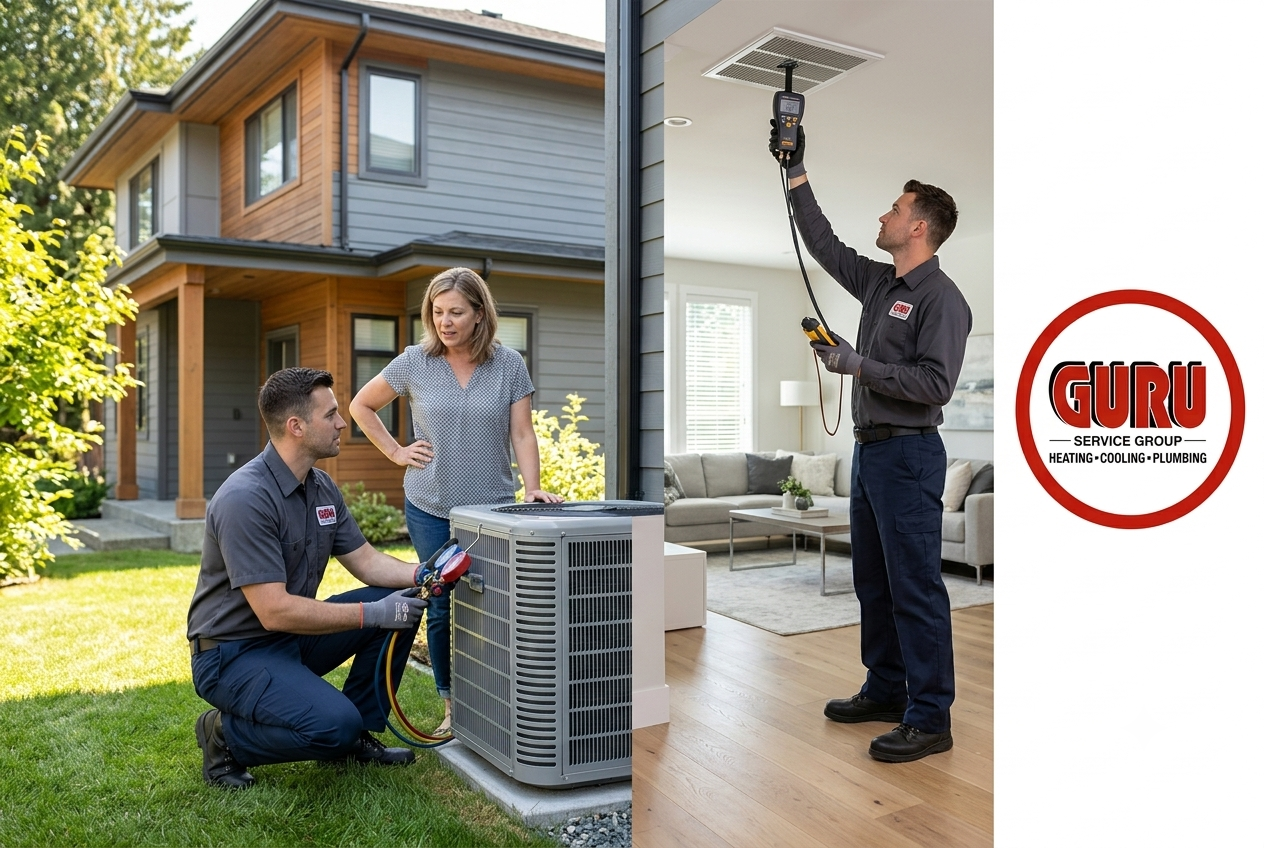
There’s nothing more frustrating than turning on your air conditioner during a hot Surrey summer only to discover that it’s blowing warm air instead of cooling your home. While some cooling problems have simple causes, others indicate serious issues that require professional attention. Ignoring these warning signs can increase energy bills, reduce indoor comfort, and even shorten the lifespan of your HVAC system.
If your air conditioner is running but your home isn’t getting cooler, this guide explains the most common causes, what you can safely check yourself, and when it’s time to call for professional AC Repair Surrey.
Quick Answer
If your AC is running but not cooling:
- Check the thermostat settings.
- Replace or clean a dirty air filter.
- Inspect the outdoor condenser for debris.
- Make sure supply vents are open.
- Turn the system off if ice forms on the indoor unit.
- Contact an experienced HVAC Contractor Surrey if the problem continues.
Why Is My AC Running but Not Cooling?
Your air conditioner works by removing heat from inside your home and releasing it outdoors. When any part of this process is interrupted, your AC may continue running without producing cool air.
The most common causes include:
- Dirty air filters
- Low refrigerant
- Frozen evaporator coils
- Blocked condenser unit
- Faulty thermostat
- Electrical component failure
- Dirty condenser coils
- Airflow restrictions
Finding the exact cause early can prevent more expensive repairs later.
Check Your Thermostat First
Before assuming there’s a major mechanical problem, inspect your thermostat.
Make sure:
- Cooling mode is selected.
- The temperature is set below the current room temperature.
- Batteries are functioning (if applicable).
- The programmed schedule hasn’t changed.
Incorrect thermostat settings are one of the simplest and most overlooked causes of cooling issues.
A Dirty Air Filter Restricts Airflow
Air filters collect dust, pollen, pet hair, and airborne particles. Over time, they become clogged and reduce airflow throughout the system.
Common signs include:
- Weak airflow
- Longer cooling cycles
- Uneven room temperatures
- Higher electricity bills
Replacing a dirty filter every one to three months helps maintain efficient cooling and improves indoor air quality.
Frozen Evaporator Coils
Many homeowners are surprised to learn that ice can form inside an air conditioner during summer.
Frozen evaporator coils are often caused by:
- Restricted airflow
- Dirty filters
- Low refrigerant
- Blower motor problems
If you notice ice on refrigerant lines or the indoor unit, switch the system off and allow it to thaw before requesting professional service.
Running the system while frozen may damage the compressor.
Inspect the Outdoor Condenser Unit
The outdoor condenser releases heat collected from inside your home.
If airflow around the condenser becomes blocked by:
- Leaves
- Grass
- Dirt
- Branches
- Outdoor furniture
the system struggles to remove heat efficiently.
Keep at least two feet of clear space around the outdoor unit to improve performance.
Low Refrigerant Is More Than a Cooling Problem
Refrigerant doesn’t get “used up” under normal operating conditions.
If levels are low, the system likely leaks.
Common symptoms include:
- Warm air from vents
- Ice buildup
- Hissing sounds
- Longer cooling cycles
- Poor humidity control
Only licensed technicians should diagnose and repair refrigerant leaks before recharging the system.
Dirty Condenser Coils Reduce Efficiency
Outdoor condenser coils gradually collect dirt, pollen, cottonwood, and road dust.
When coils become dirty:
- Heat transfer decreases.
- Cooling performance drops.
- Energy consumption increases.
- Compressor strain increases.
Professional coil cleaning is often recommended during annual HVAC maintenance.
Blocked Air Vents and Ductwork
Cooling problems aren’t always caused by the air conditioner itself.
Blocked vents, closed registers, damaged ductwork, or disconnected ducts can prevent conditioned air from reaching different areas of your home.
Walk through your home and ensure all supply vents remain fully open and unobstructed.
Electrical Problems Can Affect Cooling
Several electrical components control your cooling system.
A failing:
- Capacitor
- Contactor
- Fan motor
- Relay
- Control board
may allow the AC to run without producing adequate cooling.
Electrical diagnosis should always be performed by qualified professionals.
When Should You Call an HVAC Professional?
Contact an experienced HVAC Company Surrey if you notice:
- Warm air continues after basic troubleshooting.
- Ice repeatedly forms on the unit.
- Refrigerant leaks are suspected.
- Loud grinding or buzzing sounds.
- The outdoor unit won’t start.
- Breakers continue tripping.
- Your system runs continuously without cooling.
Delaying repairs often leads to higher repair costs and increased energy consumption.
Prevent Future Cooling Problems
Regular maintenance remains the best way to avoid unexpected breakdowns.
Annual servicing should include:
- Air filter inspection
- Refrigerant pressure testing
- Condenser coil cleaning
- Electrical safety inspection
- Thermostat calibration
- Drain line cleaning
- Airflow testing
- System performance evaluation
Preventive maintenance helps improve efficiency, reduce energy costs, and extend equipment life.
Stay Comfortable with Expert HVAC Service
An air conditioner that runs without cooling is more than an inconvenience—it often signals an issue that should be addressed before it becomes a major repair. While checking filters, thermostat settings, and outdoor airflow can solve minor problems, persistent cooling issues should always be inspected by experienced professionals.
Contact Guru Service Group for dependable AC Repair services for homeowners experiencing cooling problems, poor airflow, refrigerant issues, and system failures. Whether you need emergency repairs, routine maintenance, or a complete system inspection, their experienced technicians deliver reliable HVAC solutions to keep your home comfortable throughout Surrey’s warmest months.
Frequently Asked Questions (FAQs)
Should I turn off my AC if it's frozen?
Yes. Turn the system off and allow the ice to melt. Continuing to run a frozen AC can damage important components.
How often should I replace my AC air filter?
Most homes benefit from replacing the filter every one to three months, depending on usage and indoor air quality.
When should I call an HVAC contractor in Surrey?
If your AC continues blowing warm air after basic troubleshooting, or you notice refrigerant leaks, electrical issues, or unusual noises, contact a professional immediately.
Can regular maintenance prevent cooling problems?
Yes. Annual HVAC maintenance helps identify small issues early, improves efficiency, reduces breakdowns, and extends the life of your air conditioning system.